Keeping a High‑Force Machine Quiet, Compact and Repairable
Engineering one air-driven piston to deliver both stroke and suction
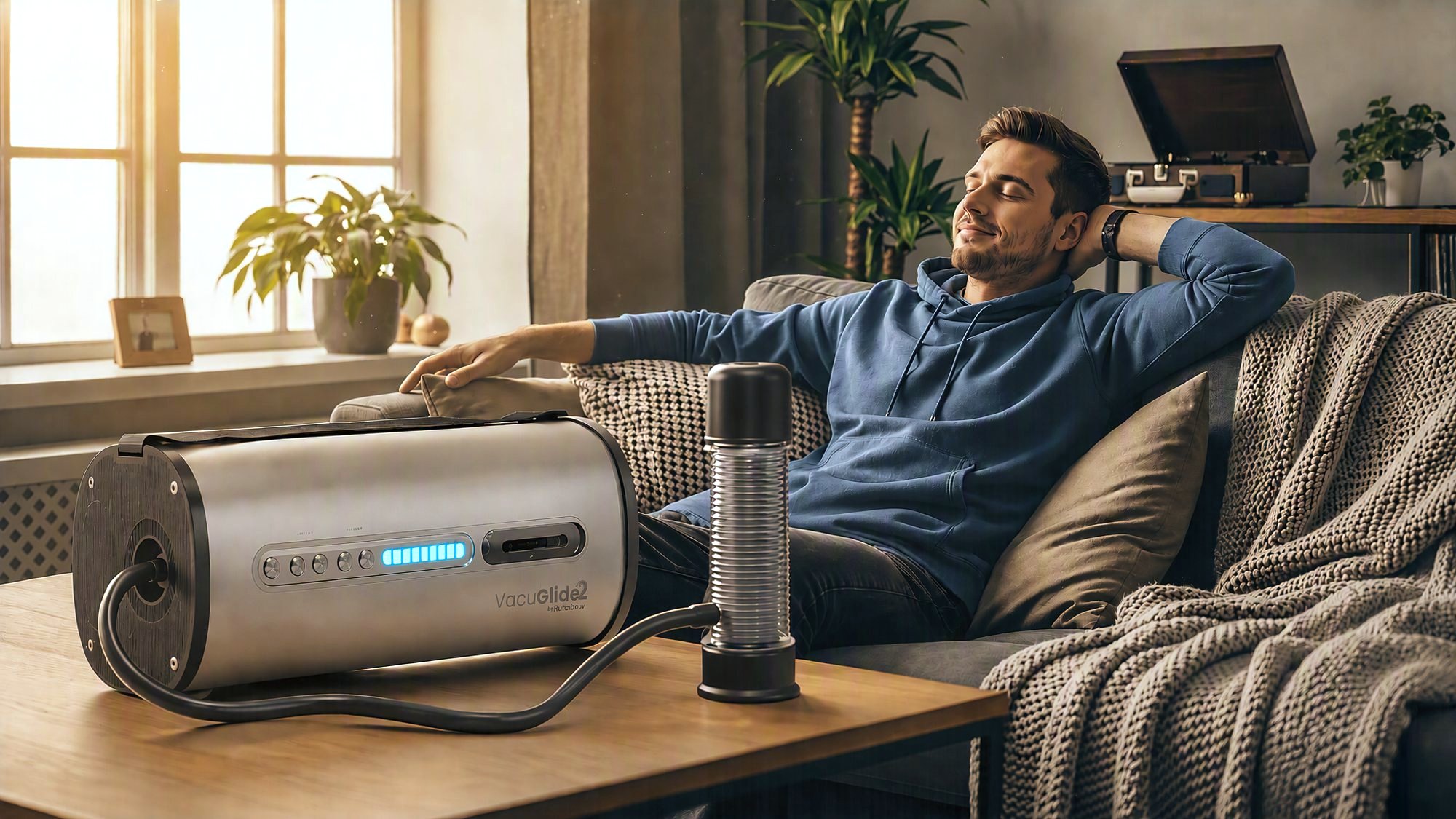
VacuGlide is a stroker and a vacuum pump in one. A single large piston moves air, and that air creates both the stroke and the suction. The result is closer to real oral sensation than a sleeve pushed by a motor arm.
The challenge
Big force, small body, many parts
Delivering that feeling put heavy demands on the machine. Our team had to solve four of them at once:
Force. The piston runs under heavy load. Wear inside turns into noise and a shorter life.
Size. The machine had to stay as compact as possible, and easy to move.
Kit. Cups, tubes and power had to travel with the unit, without clutter.
Hygiene. Every part that touches the body had to come apart for washing.
The client
A brand set on mastering men's wellness
Autoblow is a men's wellness tech brand founded by Brian Sloan. Its goal is ambitious: to build a professional master brand for men's sexual experience. VacuGlide would be its first large, high-powered machine.
The opportunity
A dedicated process for an unfamiliar product
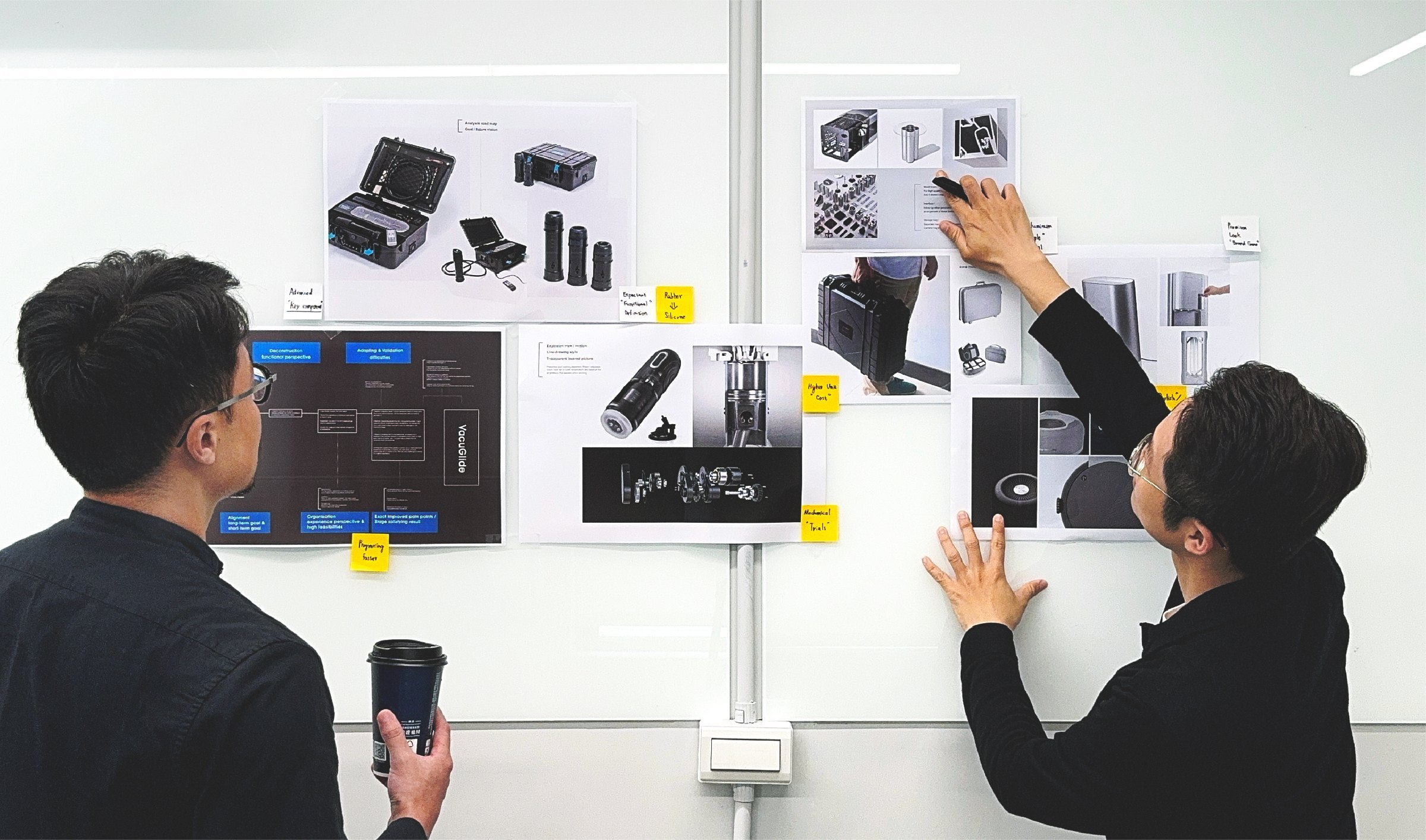
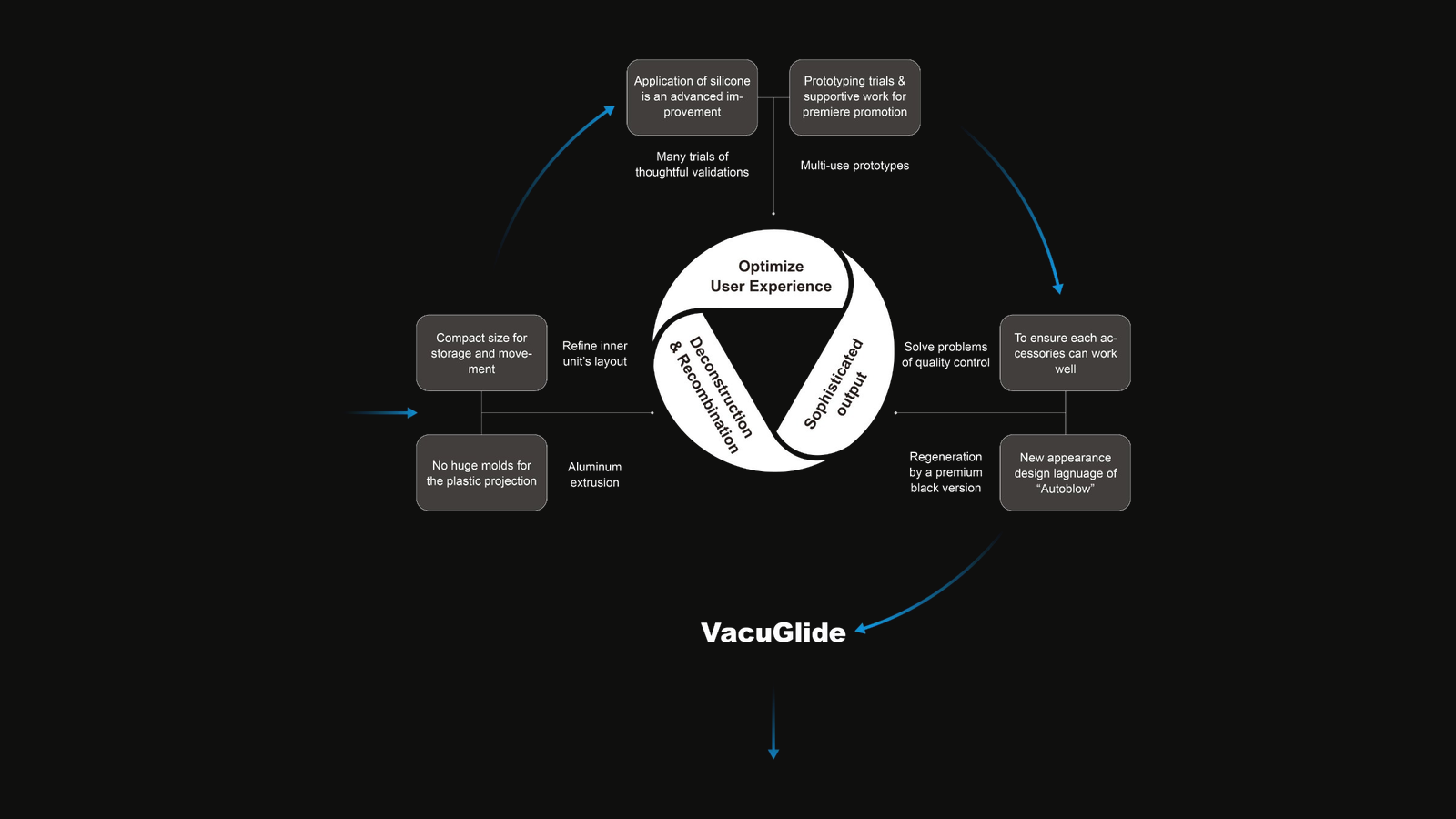
Autoblow asked us to improve the user experience and make the machine as compact as possible. We had never built this kind of product. So we set up a development process just for this project.
That process paired every design step with a physical trial. We built prototypes early, recorded each round, and tested them the way people would actually use them. Each finding fed straight back into the next build.
The hardware also had to carry everything Autoblow planned to run on it:
A wide speed range. 20 speed levels, from 10 to 225 strokes per minute, all from one drive.
Programmable suction. Users set intensity, suction rhythm and edging, so suction needed full digital control.
Software on top. Video sync in 2D and VR, an AI partner and an open API all run on the same hardware.
Every user. Three sleeve sizes in the box, and a cap that adds suction to other strokers.
Key successes
Took a first-of-its-kind machine from kickoff to launch-ready in 22 months
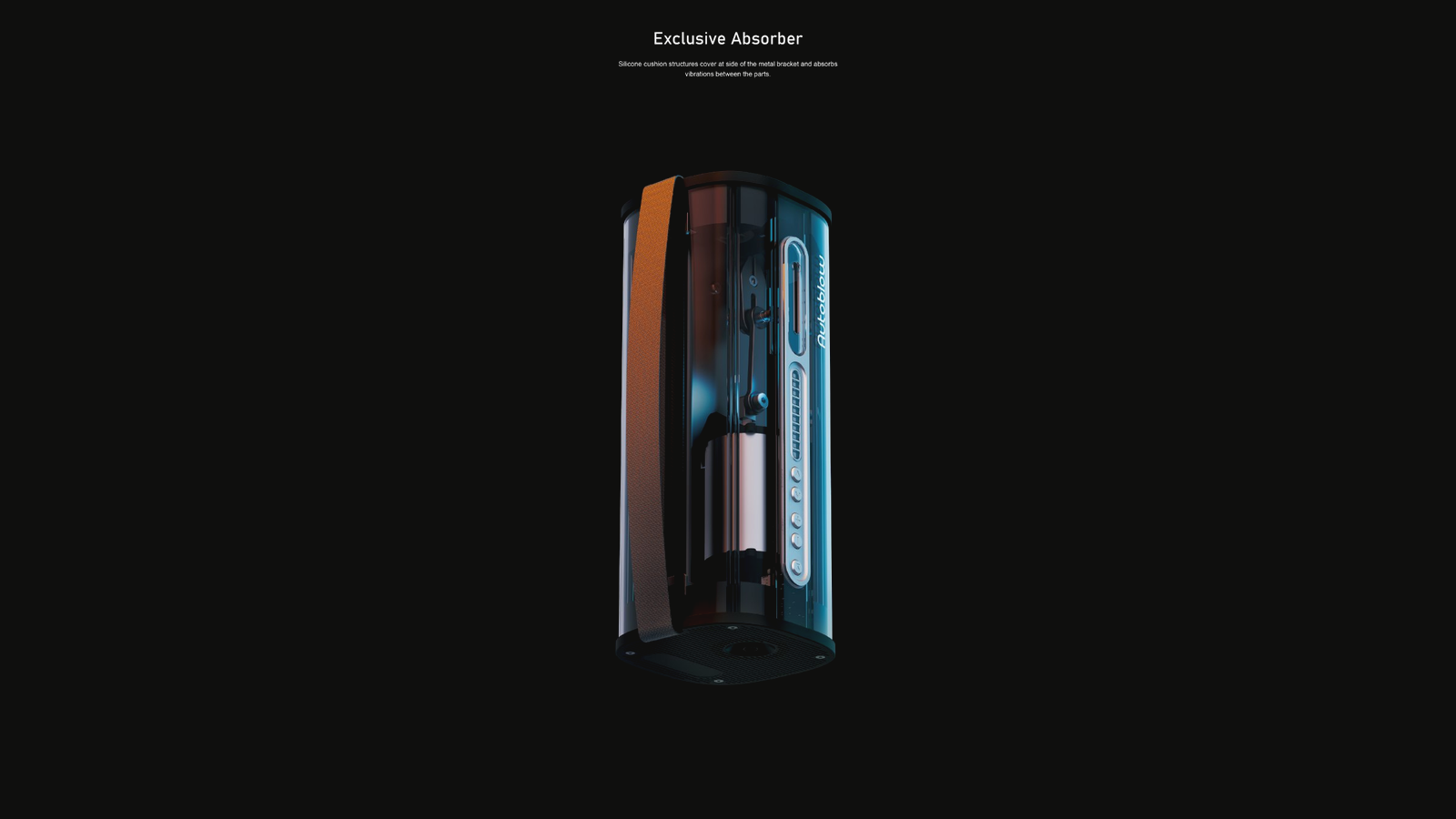
Ended metal-on-metal clanging with a silicone cushion structure
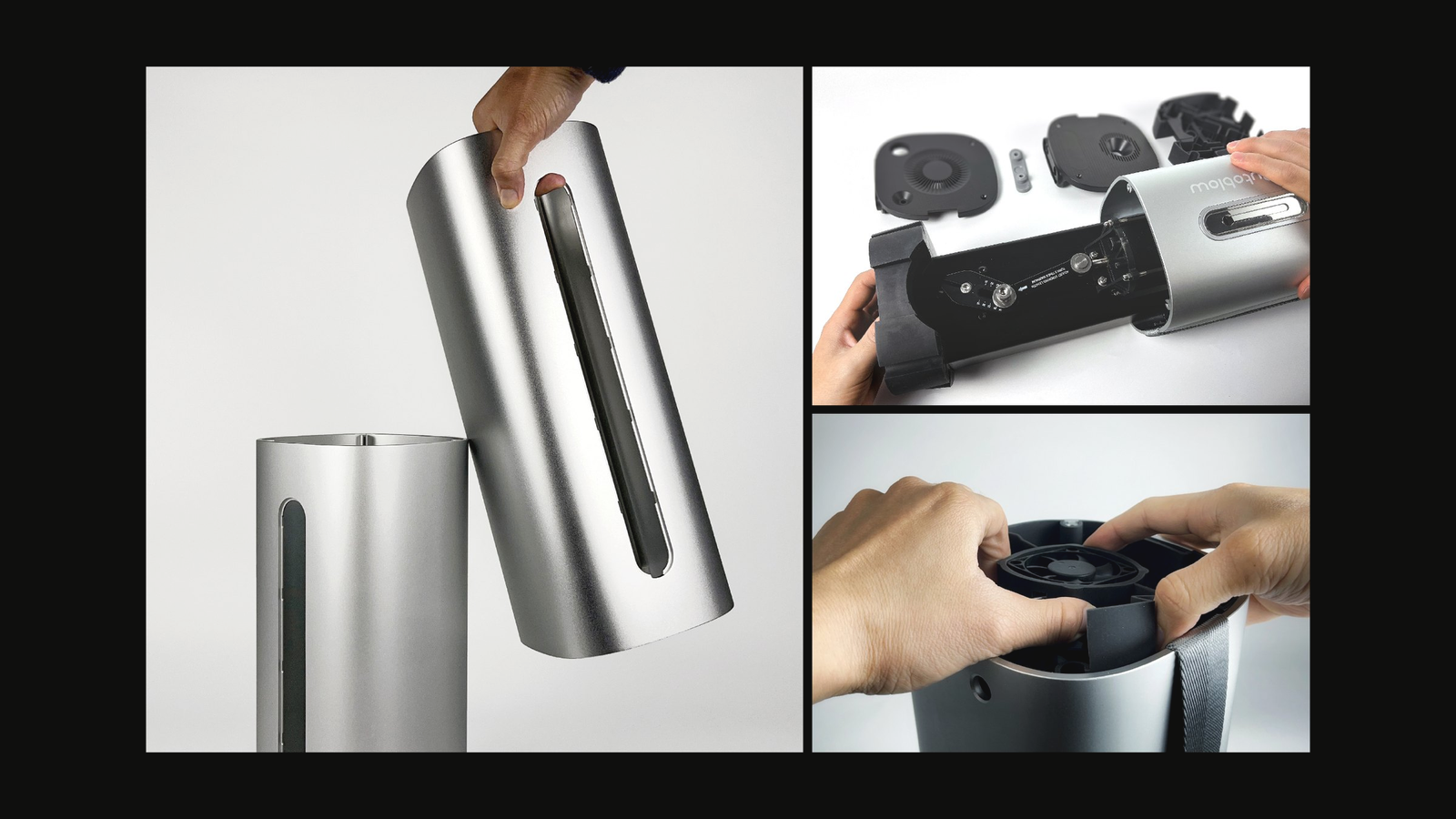
Made the machine repairable, with simpler assembly
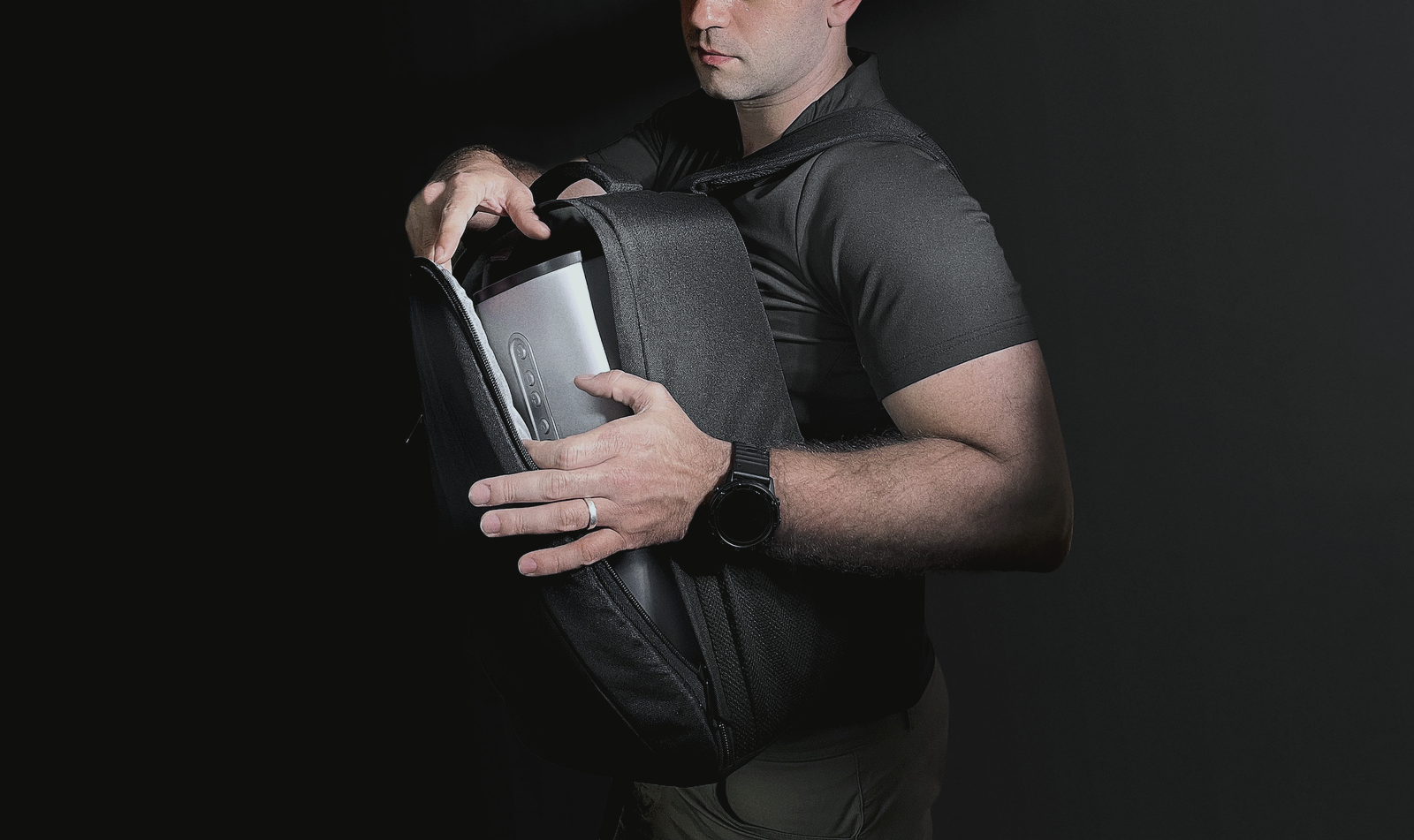
Packed a high-power drive into a compact upright body that travels in one backpack
Replaced rubber sleeves with reusable, skin-friendly silicone
Every body-contact part comes apart for a full wash
Hardware built for app control, video sync, AI and free firmware updates
Rated 4.9 out of 5 from 88 reviews on Autoblow's site
Behind the design
Advising against a big mold for a first launch
Good product development is not only about design. It is also about helping a client spend wisely. VacuGlide was new and niche, and it shipped with many parts: three cup sizes, an air tube, an adapter, a wrench and a custom backpack.
A large injection mold would lock in a big upfront cost before the market had answered. So we advised Autoblow to start with a more refined manufacturing method. The unit cost was higher, but the risk of a first launch was far lower.
That choice also kept the design open between rounds. As the line grew, later products could share parts with VacuGlide, which brought costs down across the family.
Validation
Ending the clang
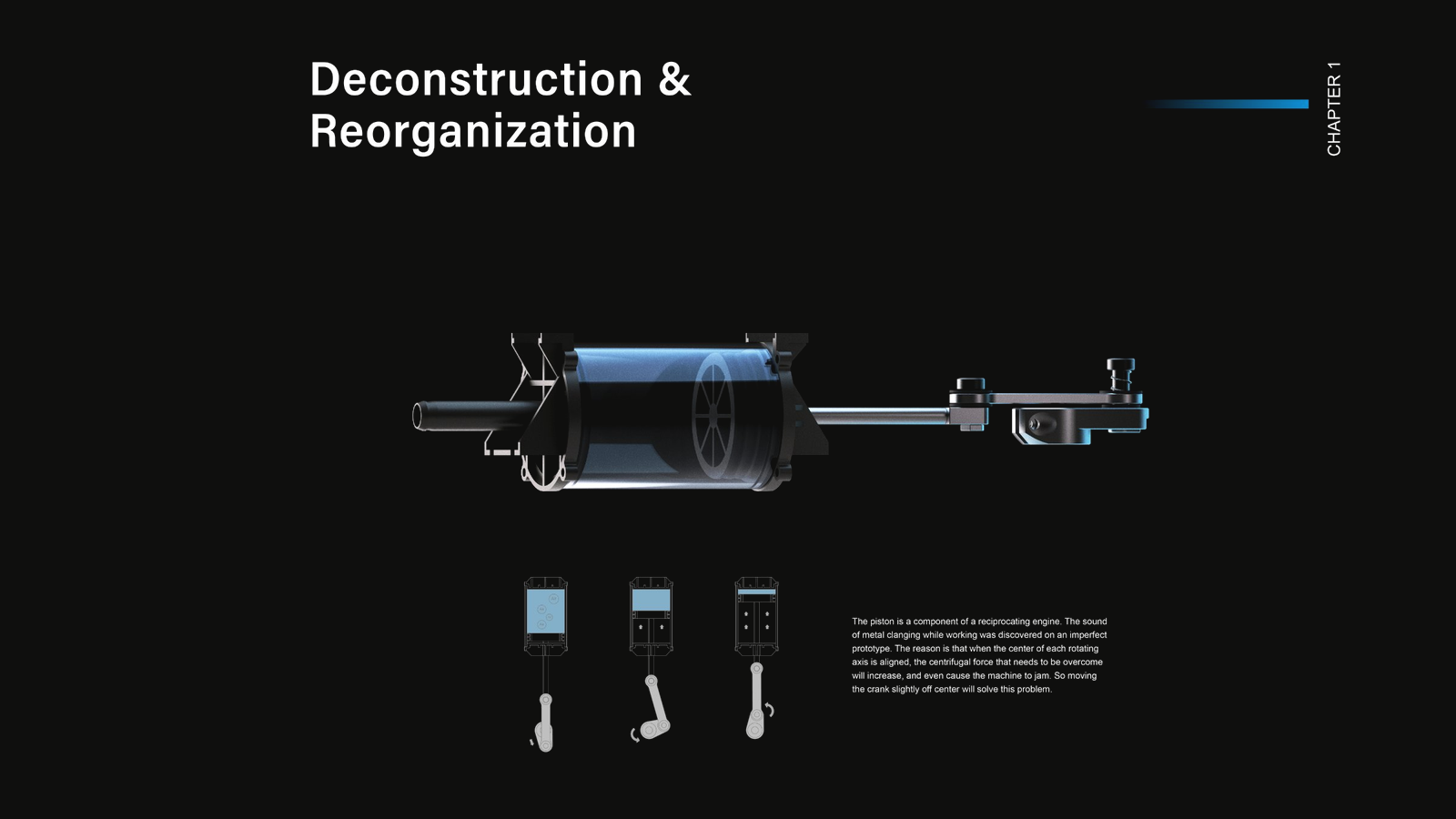
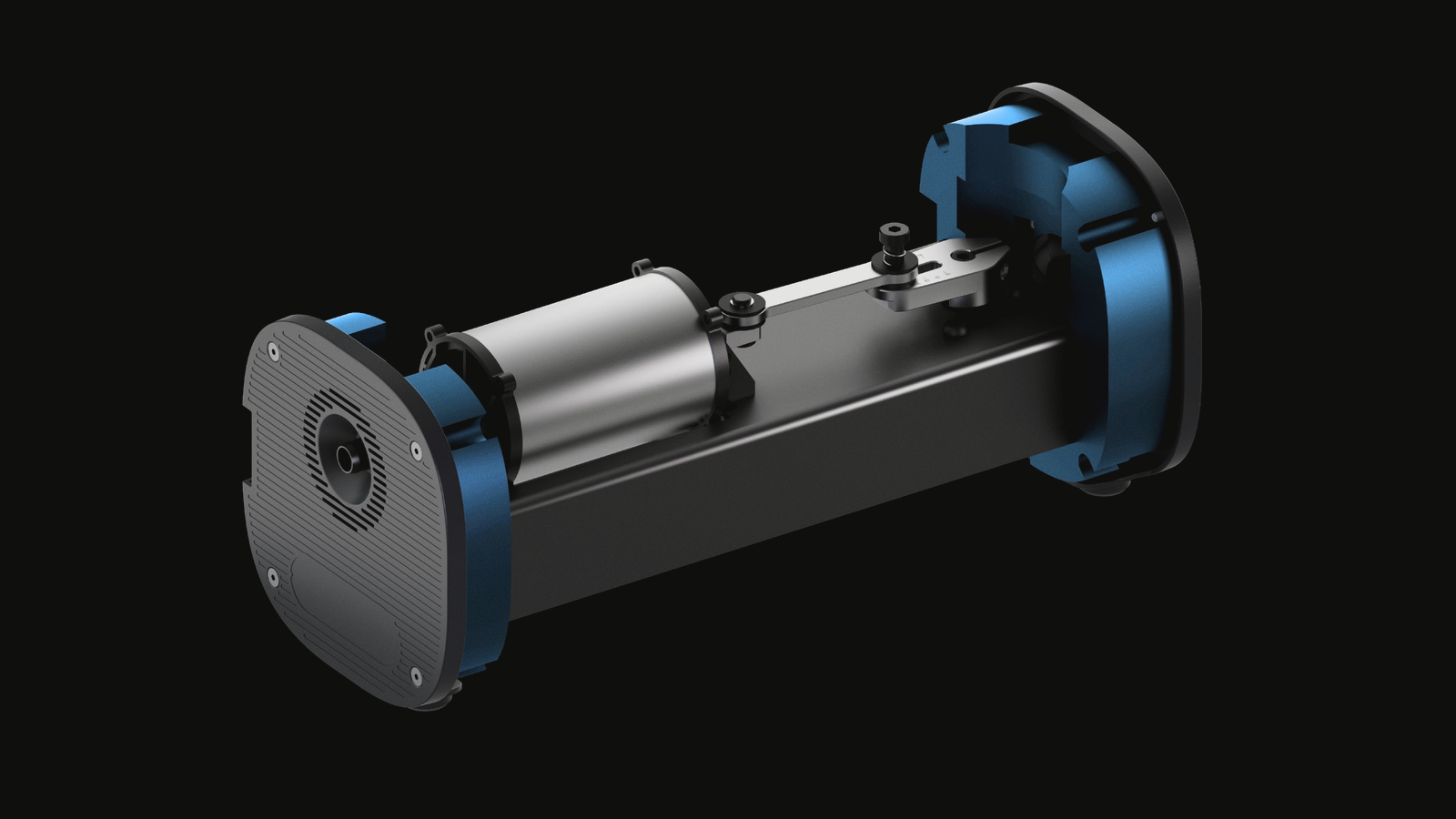
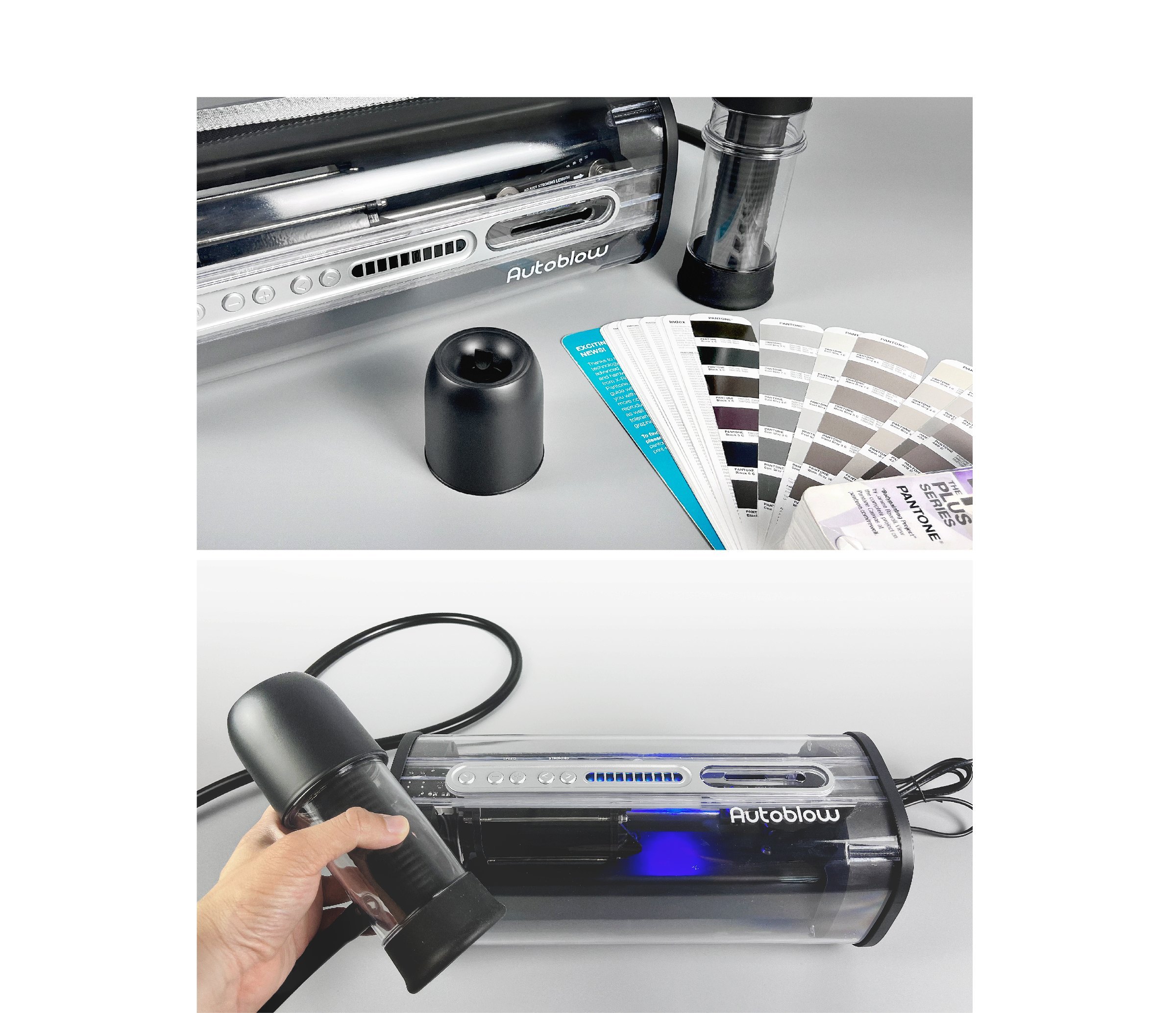
The machine works under great force. Inside, a metal bracket and an aluminum extruded shell kept striking each other. This caused wear and a metallic clanging noise. We added a silicone cushion along the side of the bracket to absorb vibration. The same change made the machine repairable and simplified assembly.
The take‑out test
We packed the unit, adapter and cables into the carry backpack. Then we checked that everything fit and could be carried in one go.
Grip and handle load
The machine weighs 14 lb (6.35 kg). We tested how the body feels when lifted and held. We also loaded the carry handle to confirm it holds the full weight.
Engineered for production
One piston, two sensations
Inside, a motor drives a slider-crank that turns rotation into a straight stroke. That stroke moves a large piston, which pushes and pulls air through the tube to the cup. Electronic valves under full digital control set how much suction stays in.
An industrial frame
The slider runs on a guide rail inside a black anodized aluminum beam, with bearing end blocks. Internal parts are steel, copper and brass, inside an extruded aluminum shell.
Brushed, then anodized
The upright cylinder keeps parting lines to a minimum. The metal tube is brushed, then anodized, and sits between a soft matte black top cap and base. The base is non-slip, so the machine stays put during use.
A flush control strip
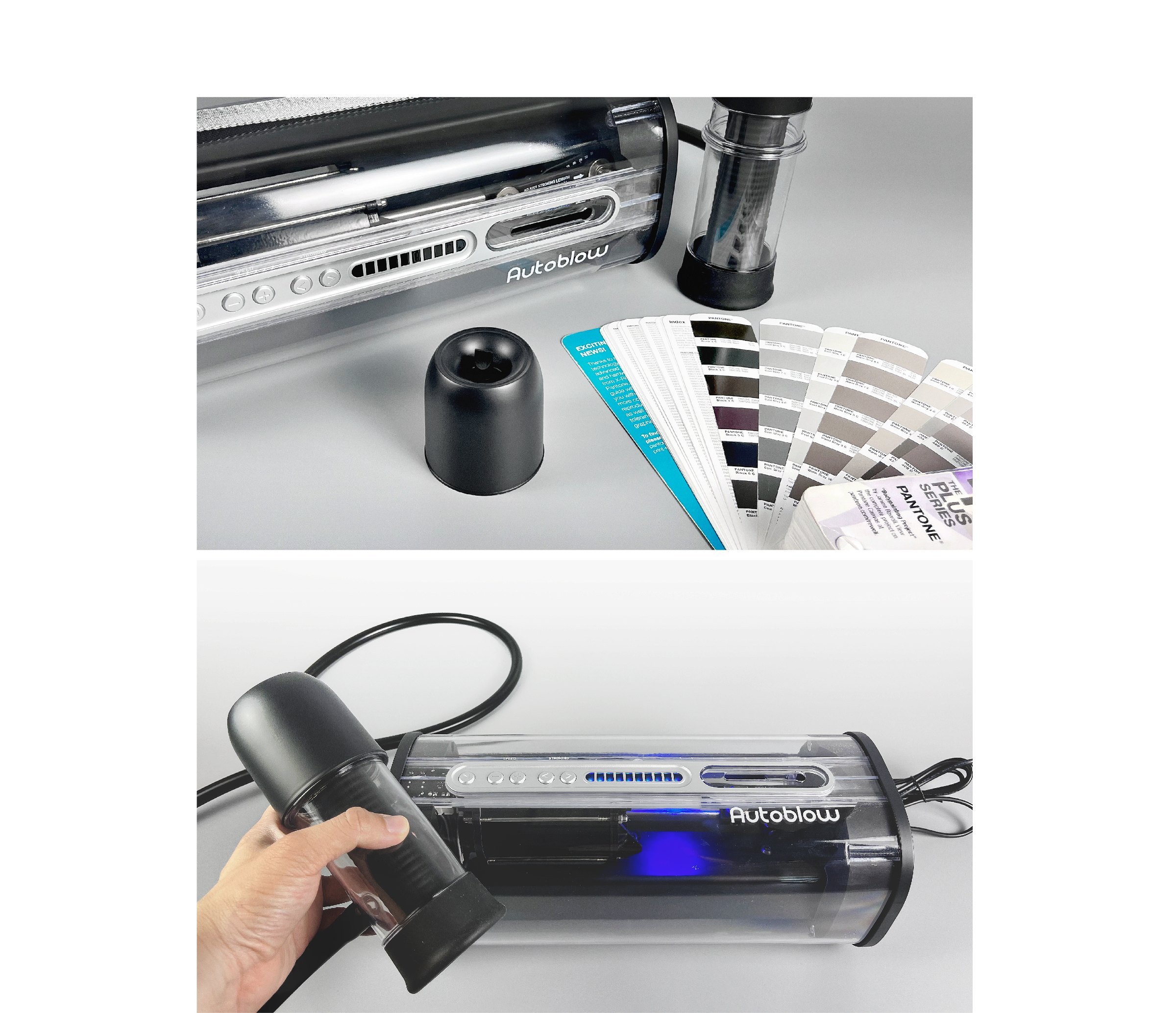
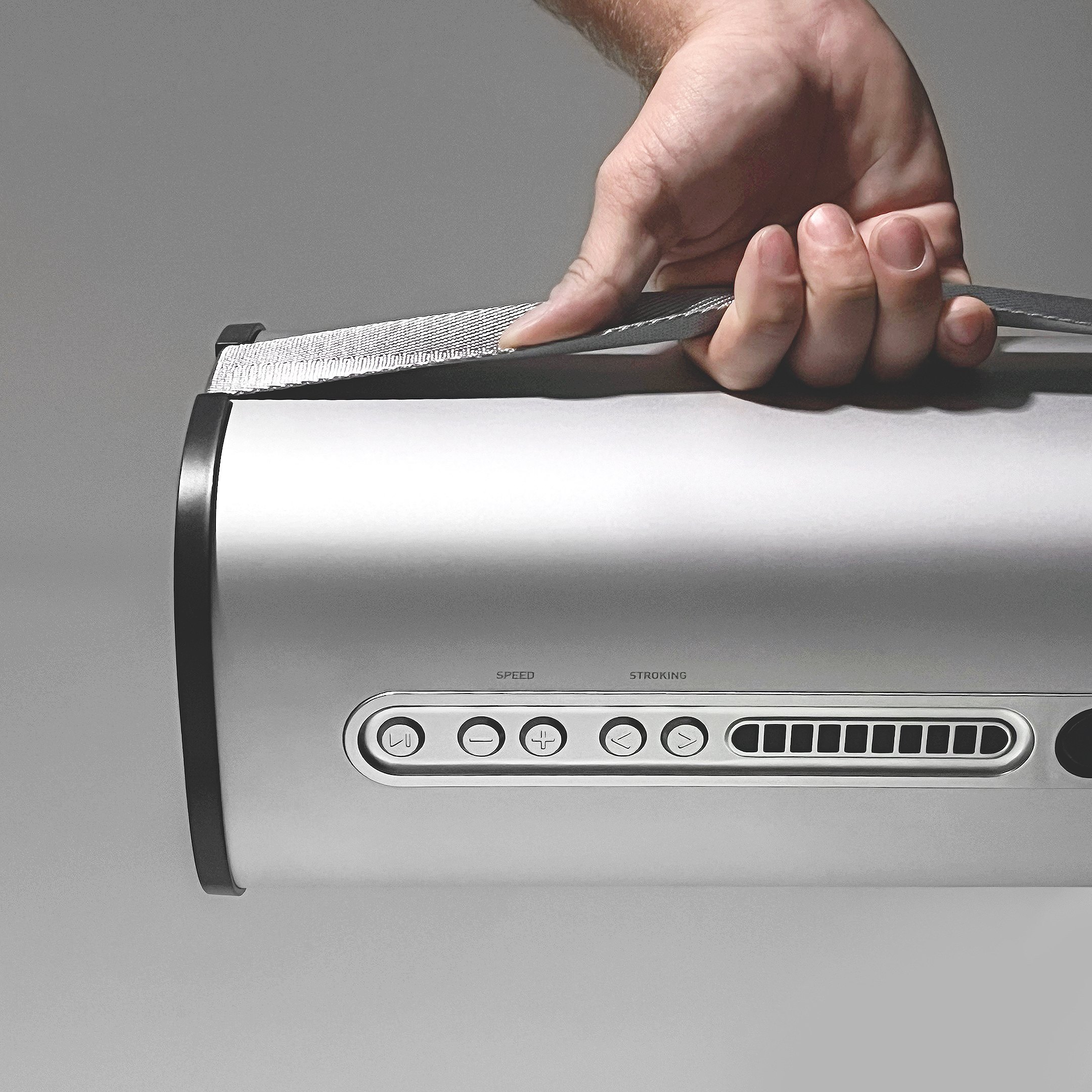
A recessed strip runs down the body, flush with the surface. It holds five buttons: mode and pause, speed up and down, and stroke position up and down. A 10-segment LED bar shows the level.
Serviceable by design
The top cap holds the power switch, a vent grille and service screws. The webbing handle anchors to the internal frame, not the shell, so the load goes through the structure.
Why silicone beat rubber and TPE
Competing sleeves are mostly rubber, which creates too much friction. TPE is softer, but it makes air pressure hard to control and wastes consumables. We chose silicone: kinder to skin and reusable many times.
Every contact part comes apart
The sleeve, cup and air tube all come apart from the unit. Every body-contact part can be washed thoroughly, so hygiene is never in doubt.
Hardware defined around the app
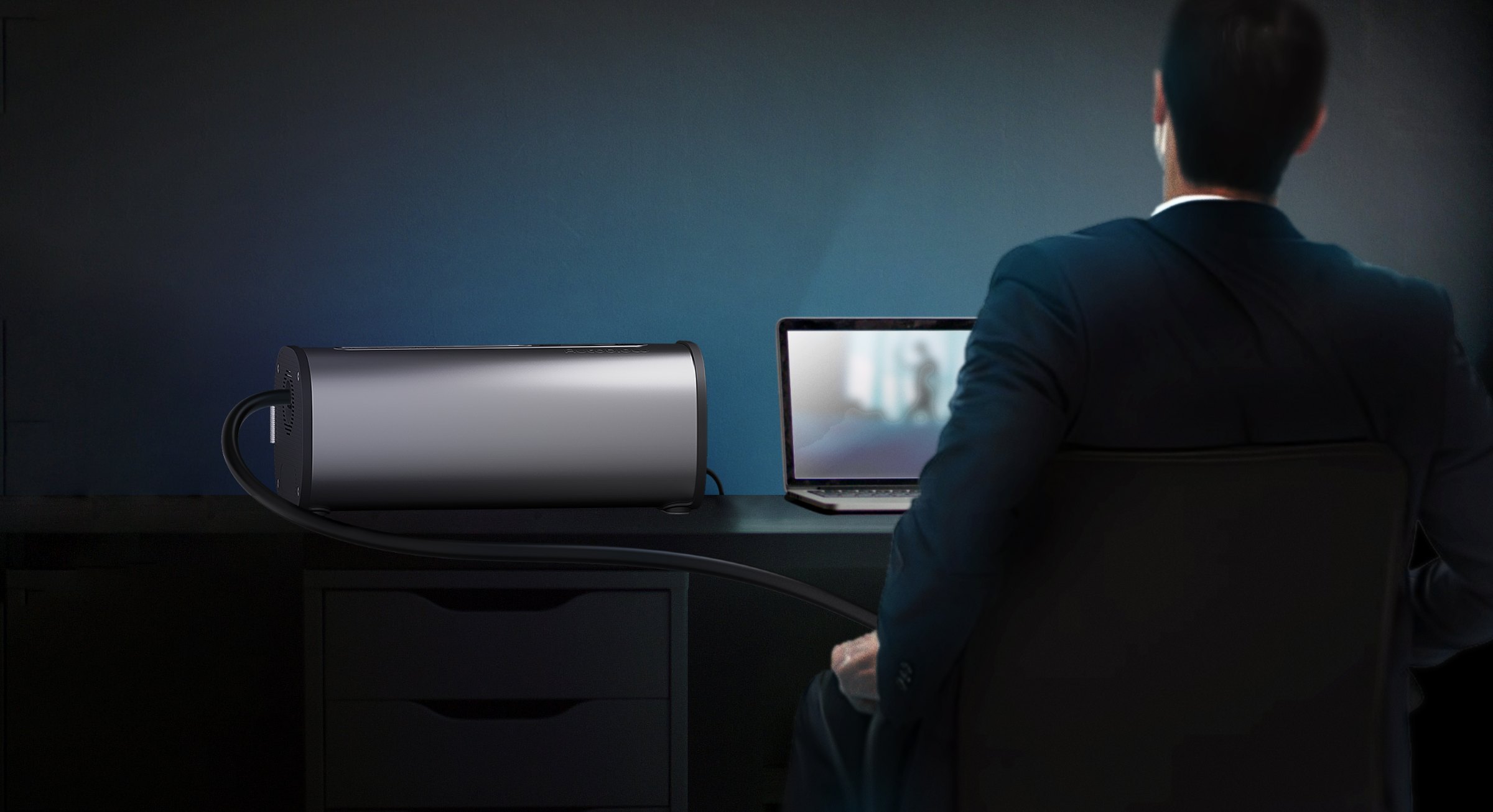
Autoblow builds its own app, video sync and AI features. We defined the hardware around them from day one. The electronics support phone, tablet and PC control, and take free firmware updates. Features keep growing after purchase.
Project timeline
Jan 2022
Kickoff
Set up a dedicated development process
—
Concept and ID
Defined the compact upright form, the flush control strip and the hardware for app control
—
Prototype trials
Load, take-out, grip and handle tests; silicone cushion added
—
Material and manufacturing
Moved sleeves to silicone; chose a low-risk method over a large mold
Oct 2023
Launch-ready
Development complete
In market
Built to grow into a product family
Users notice what we set out to solve. They praise the quiet running, the build quality and the hands-free experience. They also value video sync, the included storage backpack, and firmware updates that keep adding features.
VacuGlide 2 sells on Autoblow's site at US$1,199.95, currently US$899.95, and through European retailers. It holds 4.9 out of 5 stars from 88 reviews. A connection cap now links it with Autoblow's AI Ultra.